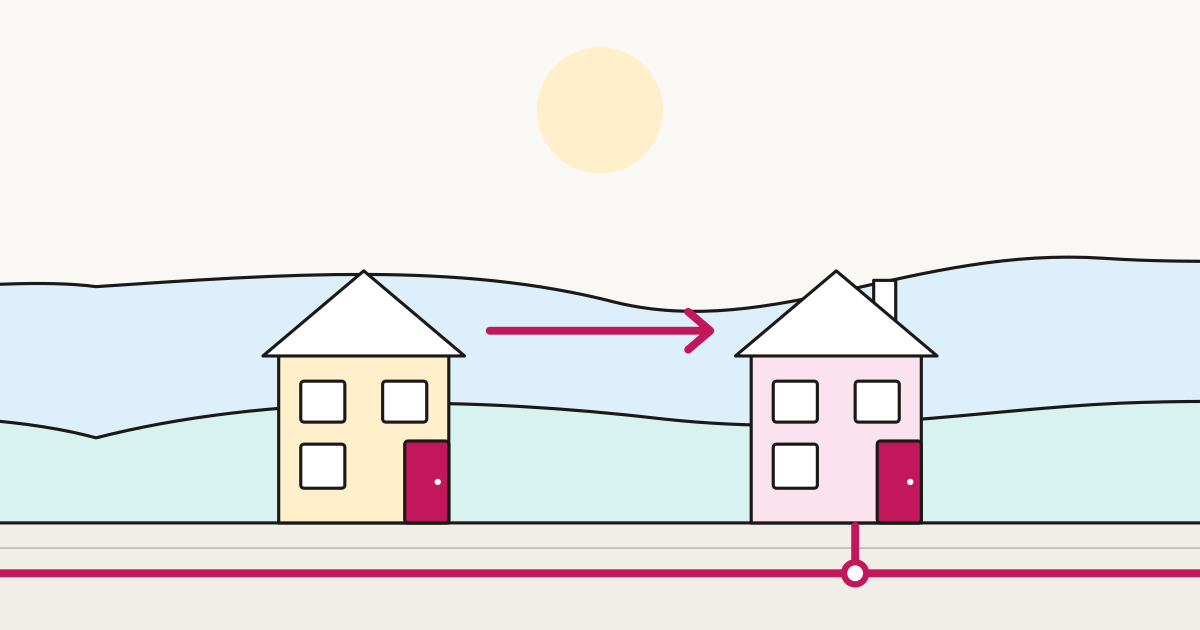
The UK’s analogue telephone network — the copper system that has carried landline calls for over a century — is being switched off. Your landline number does not disappear, but the way the call travels changes completely: it moves onto your broadband connection.
For most households this is a plug-swap and nothing else. For a specific and important minority it needs planning, and the industry’s early handling of that group was poor enough that the migration was slowed down deliberately.
What is actually happening
The old network, PSTN, is being retired and replaced by voice over broadband — marketed variously as Digital Voice, Digital Phone or similar depending on your provider.
In practice: instead of plugging your phone into the wall socket, you plug it into the back of your router.
The timetable has moved more than once. The original end date was December 2025; the industry pushed it back after concerns about vulnerable customers, and the migration is now running to a later deadline with providers moving customers in batches. Your provider will write to you before they move you. The date that matters is theirs, not the national one.
For most people: genuinely almost nothing
- Your number stays the same.
- Your handset usually works unchanged — you plug it into the router instead of the wall.
- Call quality is generally the same or better.
- You do not need broadband service to have digital voice, but you do need the router, and some providers will supply a connection purely to carry the phone.
If you have a modern cordless phone, broadband already, and no medical alarm, this is a five-minute job on the day.
The power cut problem
This is the part that matters, and it is not scaremongering — it is the specific reason the switchover was slowed.
The old copper landline carried its own power from the exchange. In a power cut, your phone still worked. That is why it was the thing you reached for.
Voice over broadband depends on your router, and your router depends on mains electricity. Power goes off, router goes off, phone goes off.
Providers must offer a solution to customers who depend on their landline — typically a battery backup unit that keeps the phone working for a period during an outage, or a mobile handset where signal allows. These are provided free to eligible customers, but generally you have to be identified as needing one.
If you, or someone you help, is in any of these groups, contact the provider before the migration rather than after:
- No mobile phone, or no usable mobile signal at home
- A telecare or personal alarm — pendant alarms, fall detectors, warden call systems
- A medical device that dials out, such as some monitoring equipment
- Anyone who would be at risk if unable to call for help during a power cut
Telecare alarms: the one to check properly
Personal alarm pendants and warden call systems were designed for the analogue network. Some work fine over digital voice. Some do not, and the failure mode is silent — the device appears normal and simply fails when used.
Do not assume it works. Check it.
The sequence:
- Tell your telecare provider (often the council or a housing association) that your landline is moving to digital.
- Tell your broadband provider that you have a telecare alarm. This should flag your account as needing extra care.
- Test the alarm after the switch. Most alarm services have a test procedure. Use it.
Councils and alarm providers have been replacing analogue units with digital-ready ones, but coverage of that programme is uneven. The test is the only thing that actually tells you.
Other things that used the old network
Worth a thought if you have any of them:
- Alarm systems that dial a monitoring centre
- Lift emergency phones in blocks of flats — a building management issue, but worth raising
- Card payment terminals on older analogue lines
- Fax machines, still surprisingly common in some sectors
- Door entry systems that call a phone line
Most have digital equivalents. None of them update themselves.
What you should actually do
If you have broadband and a mobile and no alarms: nothing. Wait for the letter, plug the phone into the router.
If you rely on your landline: call your provider now and ask to be recorded as needing additional support. Ask specifically about battery backup. Do not wait for the letter.
If you have a telecare alarm: the three steps above, and test it afterwards.
If you have no broadband at all and only want a phone: providers must still be able to give you a phone service. It will arrive over a broadband line even if you never use it for internet. You should not be forced to buy an internet package you do not want in order to keep a telephone.
If you are helping an older relative: this is the single most useful call to make on their behalf. The people most affected are the least likely to have read anything about it, and the difference between a planned migration and an unplanned one is considerable.
Does this change which broadband to buy?
Marginally.
If someone in the house depends on the phone, ask a prospective provider two questions: what they supply for power-cut resilience, and how they handle telecare customers. Answers vary, and a provider that has clearly thought about it is telling you something useful about how they treat vulnerable customers generally.
Otherwise it barely matters. Every provider is making the same transition; the difference is in how well they communicate it.
The short version
- Your number is safe. Your phone plugs into the router instead of the wall.
- The real issue is power cuts, because the router needs mains electricity.
- Battery backup exists and is free for those who need it — but you usually have to be identified as needing it.
- Telecare alarms must be checked and tested, not assumed.
- If you are helping someone older or less confident, make the call for them.
Sources
- ofcom.org.uk — Ofcom — the move to digital landlines
- ofcom.org.uk — Ofcom — protecting access to emergency services during power cuts
- gov.uk — UK Government — analogue to digital landline transition