In August 2026, toob was advertising 900Mbps full fibre on the south coast for £22 a month on a 24-month contract. In the same month, Hey!Broadband wanted £43 a month for a 900Mbps package on its own network. Same country, same technology, roughly double the price.
That spread is not a pricing error. It is what happens when some providers own the fibre running past your door and others rent it.
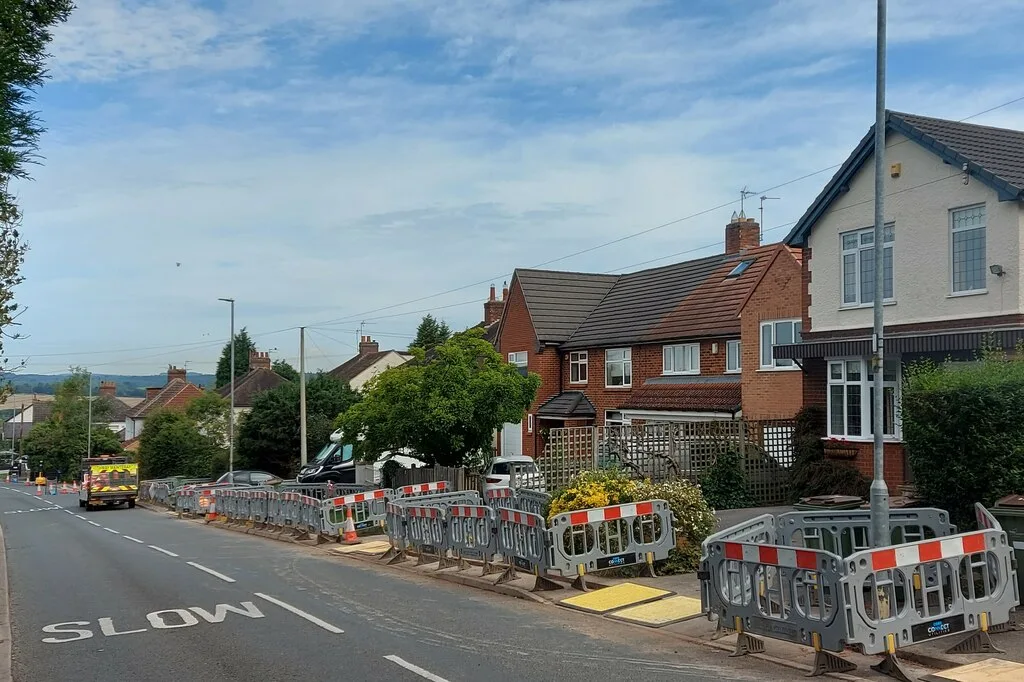
Figures correct as of August 2026. Prices, offers and altnet coverage change monthly, and this sector in particular is consolidating fast. Check any figure here against the provider’s own site before you buy.
Most big-name broadband is the same wire with a different logo
BT, Sky, TalkTalk, EE, Plusnet and Vodafone do not, for the most part, run their own cable to your house. They buy access to Openreach’s network at a wholesale price and sell it on with their own router, billing and support wrapped around it. (Openreach is owned by BT Group but operates as a legally separate business that must sell to every retailer on the same terms, BT and EE included.)
This is why their packages look so similar. When five providers quote 500Mbps average, they are usually quoting the same Openreach product, delivered over the same fibre by the same engineer. The differences are the router, the contract, the service and the price — not the physical connection.
Two long-standing exceptions exist: Virgin Media, which built its own national cable network, and KCOM, which has always run the network in and around Hull. The third category is newer.
What an altnet actually is
An “altnet” — alternative network — is a company that has dug its own fibre into the ground rather than reselling Openreach’s. There are dozens, mostly regional. Some are infrastructure builders that sell wholesale and never bill you under that name — CityFibre does not sell to consumers at all, and Netomnia’s fibre reaches households through the separate YouFibre brand. Others build the network and sell direct, such as Community Fibre, Gigaclear, Hyperoptic, toob and Grain.
The upshot: an altnet’s speeds and prices are genuinely independent of Openreach’s. When an altnet is cheaper, it is not a loss-leader on someone else’s wire. It is a different business model.
Why altnets are often cheaper — and faster
No wholesale margin. A retail ISP on Openreach pays a monthly rental per line before paying for anything else. An altnet on its own network does not.
Newer equipment. Most altnets built recently deployed XGS-PON, a fibre standard supporting symmetric 10Gbps at network level. Netomnia’s wholesale platform is 10Gbps XGS-PON with a 99.99% uptime service level agreement, and Community Fibre sells consumer packages at 2.5Gbps and 5Gbps. Openreach’s fastest widely available tiers as of April 2024 topped out at 1800Mbps, with 3.3Gbps and 8500Mbps still only in pilot from 23 March 2026.
Symmetric speeds. The most underrated advantage. Openreach’s consumer FTTP tiers are asymmetric — upload is a fraction of download. Gigaclear’s 900Mbps package advertises 900Mbps average download and 900Mbps average upload. If you back up to cloud storage or send large video files, that matters more than the download number.
They have to win you. An altnet has spent heavily digging up a street where you are already a BT or Sky customer, with no brand recognition and no high street presence. Price is the lever it has.
What that looks like in pounds
Figures from provider websites, August 2026. Speeds are advertised averages — under CAP/BCAP rules in force since 23 May 2018, a numerical speed claim in a residential broadband advert must be achievable by at least 50% of customers at peak time, which Ofcom defines as 8pm to 10pm. It is a median at the worst hour, not a guaranteed rate. Headline prices assume the longest contract on offer: toob’s 900Mbps package is £22 on 24 months but £29 on 12 months and £39 rolling monthly.
| Provider | Package (average speed) | Term | Price | Stated future rises |
|---|---|---|---|---|
| toob | 900Mbps symmetric | 24 months | £22 | £24 Apr 2027, £26 Apr 2028 |
| toob | 2300Mbps symmetric | 24 months | £29 | £31 Apr 2027, £33 Apr 2028 |
| YouFibre | 1000Mbps | 12 months | £25 | Fixed price; offer priced until 31/08/26 |
| Gigaclear | 300Mbps symmetric | 18 months | £19 | Reverts to £51 after 18 months |
| Gigaclear | 900Mbps symmetric | 18 months | £29 | Reverts to £88 after 18 months |
| Hey!Broadband | 150Mbps | 24 months | £23 | £25 Apr 2027, £27 Apr 2028 |
| Hey!Broadband | 900Mbps | 24 months | £43 | Not published on the page we checked |
| Highland Broadband | 1000Mbps | 24 months | £34.99 promotional (£79.99 standard) | +£4 each April from 2027 |
Every one of those rises is stated in pounds and pence with a date. That is Ofcom’s General Condition C1, in force since 17 January 2025, which bans inflation-linked and percentage mid-contract rises in new consumer contracts. Providers must publish a Core Subscription Price and the exact monetary increase. Fixed monetary rises are still allowed — they just have to be spelled out before you sign.
The out-of-contract cliff is the real catch
£19 a month for 300Mbps symmetric is an excellent price. But Gigaclear’s own site states that after the 18-month minimum term the price reverts to the standard list price for existing customers — currently £51 for 300Mbps and £88 for 900Mbps.
This is not unique to Gigaclear and it is not hidden. Highland Broadband’s £34.99 gigabit package was an August 2026 promotion against a £79.99 standard price, and the same pattern runs across the sector. But it is the most expensive thing about altnet broadband if you forget it. Put the contract end date in your calendar the day you sign.
The catch that matters most: coverage is street-by-street
If you take one thing from this article, take this.
Altnet coverage is not regional the way mobile coverage is regional. It is street-by-street, sometimes side-of-the-street-by-side-of-the-street. An altnet picks roads based on build cost, existing ducting, council permitting and premises passed per mile. Your neighbour three doors down may have a provider you cannot get.
So you cannot usefully browse altnet deals nationally, and any comparison table — including the one above — is a rough guide until you have entered a postcode. It cuts the other way too: a local network may already pass your door at a lower price than the household name you are paying now, and nothing will tell you unless you check.
Who builds where
Sizes come from ISPreview’s August 2026 round-up, which uses thinkbroadband’s independent modelling of premises “ready for service” as at July 2026, alongside operators’ own announcements where these are more recent. Operator claims and independent modelling routinely diverge, sometimes by hundreds of thousands of premises, because “passed”, “covered” and “ready for service” are counted differently. Treat every number below as an order of magnitude with a date attached.
| Operator | Where it builds | Premises |
|---|---|---|
| CityFibre | 95+ towns and cities, wholesale only | ~4.5m ready for service of 4.7m covered (Jan 2026); 1m connected Jun 2026 |
| Netomnia (retail brand YouFibre; Brsk merged into YouFibre in 2026) | Wide UK footprint, largely outside London | ~2.95m ready for service (Jun 2026) |
| Community Fibre | Greater London, plus parts of Surrey and Sussex through its Box Broadband acquisition | ~1.5m, 429,000 customers (2026) |
| Hyperoptic | Flats and multi-dwelling blocks, 50+ cities; also resells over Openreach off-net | ~1.3–1.4m modelled; 2m claimed (Jul 2026) |
| Gigaclear | Rural southern and central England — Oxfordshire, Gloucestershire, Devon, Somerset | ~618,000 ready for service, 170,000 customers (2025 accounts, published Jun 2026) |
| Fibrus | Northern Ireland and Cumbria | ~400,000–450,000; 150,000+ customers (2026) |
| Trooli | Kent, Sussex, Hampshire, Suffolk, Cambridgeshire and parts of Scotland | ~480,000 (end-2025 accounts, published Aug 2026) |
| Airband | Rural England and North Wales — Worcestershire, Herefordshire, Shropshire, Devon, Somerset, Oxfordshire, Cheshire | ~175,000 full fibre plus ~265,000 fixed wireless (Jul 2026) |
| G.Network | Central London | ~420,000, ~25,000 customers |
| FreedomTruespeed Group (Freedom Fibre + Truespeed) | North West, West Midlands, South West and East of England | 412,000 ready for service, 70,000 customers (merger completed Apr 2026) |
| Grain | 60+ urban centres plus new-builds | ~300,000+, 43,000 customers (Jul 2026) |
| toob | Own network in Hampshire, Dorset, Surrey, Sussex, Berkshire; also sells over CityFibre elsewhere | ~256,000–288,000 on its own network |
| GoFibre | Scottish Borders, North East Scotland, northern England | 130,000 ready for service (May 2026) |
| Highland Broadband | Argyll, Fife, Highlands, Lothians, Moray, Stirlingshire | Rural Scotland; no independent figure published |
| Lightning Fibre | Eastbourne, Hastings, Hailsham, Heathfield, Tenterden | Sussex / Kent border; no independent figure published |
| Voneus | Rural communities, full fibre plus fixed wireless; has absorbed Broadway Partners, Cadence Networks and SWS Broadband | Rural UK; no independent figure published |
Others building at smaller scale include Connect Fibre, Pine Media, Rise Fibre and Carnival Internet — footprints tight enough that only a postcode check will tell you.
Retail brands are not the same as networks
Some names marketed as modern alternatives own no fibre at all. Rebel Internet, Your Co-op and italk are retail ISPs riding other people’s networks. That is not a criticism — CityFibre alone has more than 30 retail partners including Vodafone, TalkTalk, Zen Internet and Sky. But it means “is this an altnet?” is the wrong question. The right questions are whose fibre is this and what does it cost me.
The cautionary example is Cuckoo, a well-liked challenger brand. It stopped taking new orders on 11 May 2026, sold its customer base, brand and domain to Onestream, and said it intended to wind the company down solvently. Cuckoo was never a network, so when the owner’s strategy changed, the brand simply went.
“But what if they go bust?”
The most common objection, and it deserves a straight answer rather than reassurance.
The sector is genuinely under pressure. High interest rates, rising build costs and too many operators chasing the same streets have produced a shake-out. In the year to August 2026: G.Network went through administration; Gigaclear’s lenders took control of the business on 9 April 2026 in a debt-for-equity restructuring that wiped out its former shareholders; Fusion Fibre Group was hit with an HMRC winding-up petition on 29 July 2026; Airband restructured and began a formal sale process for its UK business; Netomnia put around 100 staff on redundancy notice in July 2026 after an earlier round of around 50 in February.
And it is consolidating. On 18 February 2026 nexfibre — a joint venture between InfraVia, Liberty Global and Telefónica, the latter two also owning Virgin Media O2 — agreed to buy Netomnia’s parent Substantial Group at an enterprise value of £2 billion, with the YouFibre and Brsk retail businesses to be sold on to Virgin Media O2 for £150 million. At the parties’ own request the Competition and Markets Authority fast-tracked it to a Phase 2 investigation on 1 July 2026, with a statutory deadline of 15 December 2026, so it is not a done deal. Freedom Fibre and Truespeed completed their merger in April 2026 as the FreedomTruespeed Group, and Fibrus and Ogi were reported in May 2026 to be in talks.
Now the part that answers the question. Fibre in the ground is a valuable asset with paying customers attached. It does not get switched off; it gets sold or refinanced. G.Network was carrying roughly £300 million of debt against about 25,000 customers when affiliates of FitzWalter Capital bought its secured debt and equity in early January 2026; the company then filed for administration, was restructured and emerged debt-free in March 2026 — with service continuing throughout. Gigaclear’s April 2026 restructuring worked the same way from the customer’s side: ownership passed from its shareholders to a group of eleven lenders, and the broadband kept running.
That is the normal pattern. The realistic risk is a change of brand, a change of billing system, a spell of poor customer service and eventually a different name on your direct debit — not waking up with no internet and no recourse.
Two precautions: avoid very long contracts with the smallest, newest operators, and check whether your provider is in Ofcom’s automatic compensation scheme, which pays £10.34 per day for total loss of service not fixed after two full working days, £32.31 for a missed engineer appointment and £6.46 per day for a delayed start. Participation is voluntary.
The practical worries
Will they wreck my garden? Usually not. Most installs pull fibre through existing ducting or along telegraph poles, then drill a hole roughly the width of a pencil through an external wall. Where new duct is needed it is typically a narrow channel across the front boundary, reinstated the same day. Walk the route with the surveyor first, and get the reinstatement commitment in writing if you have a resin drive or mature planting.
Can I keep my landline number? Usually yes. The old copper phone network is being retired, so any new service — Openreach or altnet — delivers voice over the internet. Confirm number porting explicitly when you order, because some altnets sell broadband only. If you rely on a telecare alarm or a lift line, say so before you order.
What about my email address? If your address ends in btinternet.com, sky.com or talktalk.net, it belongs to the provider you are leaving. Some let you keep it for a fee or a grace period; some do not. Move to an independent address you own, forward the old one while it still works, and update your bank and anything using it for password resets — before the switch, not after.
Flats, wayleaves and listed buildings
If you live in a flat, the constraint may not be the network. It may be your freeholder.
To bring fibre into a block, an operator needs a wayleave: legal permission to run and maintain cables through the communal parts, from the entry point up the risers to individual flats. Without it the operator cannot lawfully build. This is why Hyperoptic, which specialises in multi-dwelling buildings, negotiates building by building rather than street by street.
The Telecommunications Infrastructure (Leasehold Property) Act 2021 lets operators apply to a tribunal for time-limited access — up to 18 months — where a resident has requested service and the freeholder repeatedly fails to respond to notices. Note the wording: it addresses silence, not refusal. A freeholder who considers the request and says no is still entitled to say no.
The fastest route in a block is collective: get several residents to register interest with the same operator, then approach the managing agent together. Listed buildings and conservation areas add a planning layer, since external cabling and the entry point may need consent — and the operator will not apply on your behalf.
Switching to an altnet
One Touch Switch has applied to fixed broadband since 12 September 2024. You contact only the new provider; it arranges the switch and cancels your old service. Compensation is payable if the process goes wrong.
The gotcha is physical. Switching between two Openreach-based providers is a configuration change on an existing line, normally completed on the agreed date with only a short break in service. Switching from Openreach to an altnet means a new physical line has to be built and activated, which requires an engineer visit and takes longer.
So: do not cancel anything yourself, book the install before worrying about the end date, and accept that a short overlap where you briefly pay both beats a gap with no connection. If you are still in contract, check the early termination charge — still permitted under Ofcom’s rules, and on a cheap altnet deal it can be worth paying.
How to check what reaches your street
- Run a postcode check against the two or three altnets known to build in your region, using the table above as a starting point. It is the only reliable answer, because coverage is street-level.
- Look for evidence on the ground. New green cabinets, reinstated pavement trenches or fresh fibre on telegraph poles mean someone has built there, even if the sales site has not caught up.
- Register interest even where it says no. Build plans respond to demand data, and rural operators use registrations to prioritise villages.
- Cross-check Ofcom’s Connected Nations data, which reports the percentage of premises in a postcode with superfast, ultrafast and full-fibre availability. It names no operators, but tells you whether anyone has built.
broadband.click focuses on full-fibre and regional networks, and we earn a commission if you switch through some of the providers listed on this site. We do not cover every provider in the UK market, and some operators mentioned in this article — along with social tariffs and the largest national brands — are not available through us. Always check a provider’s own site for current pricing before you buy.
Frequently asked questions
What is an altnet?
An altnet, short for alternative network, is a broadband company that has built its own fibre-optic network rather than reselling access to Openreach’s. BT, Sky, TalkTalk, EE and Plusnet mostly run over the same Openreach lines, which is why their speeds are similar. An altnet on its own fibre can offer genuinely different speeds, upload rates and prices.
Are altnets actually cheaper than BT or Sky?
Often, yes. They avoid Openreach’s wholesale line rental, use newer equipment, and need aggressive pricing to win customers from established brands. In August 2026, toob advertised 900Mbps average for £22 a month on a 24-month contract, and Gigaclear 300Mbps symmetric for £19 on an 18-month term. Check the post-contract list price too — Gigaclear’s 900Mbps package reverts to £88 after the 18-month term.
What happens to my broadband if my altnet goes bust?
The network almost always gets sold or refinanced rather than switched off, because fibre with paying customers attached is a valuable asset. G.Network’s secured debt and equity were bought by FitzWalter Capital in January 2026, after which the company went through administration and emerged debt-free in March 2026, with service to its roughly 25,000 customers continuing throughout. Expect possible brand and billing changes rather than loss of service.
Why can my neighbour get an altnet when I cannot?
Altnet coverage is decided street by street, based on build costs, existing ducting and council permitting, so the boundary can run down the middle of a road. This differs from mobile coverage, which is broadly regional. The only reliable way to know what serves your address is a postcode check with each operator building in your area.
Can I switch to an altnet using One Touch Switch?
Yes. One Touch Switch has covered fixed broadband since 12 September 2024, and you contact only the new provider, which handles cancelling the old service. Because an altnet uses different physical infrastructure, a new line must be installed by an engineer, so allow longer than an Openreach-to-Openreach switch and expect a brief overlap rather than a gap.
Will an altnet let me keep my landline number?
Usually yes, though voice will be delivered over the internet rather than the old copper network, which is being retired. Confirm number porting when you order, as some altnets sell broadband only with no voice product. Mention any telecare alarm or lift line first, because these need specific arrangements during the changeover.
Sources
- toob.co.uk — — home150 £18, home900 £22, home2300 £29 with April 2027/2028 rises in pounds
- gigaclear.com — — 300/600/900Mbps symmetric at £19/£24/£29, 18-month term, £51/£63/£88 list prices, “26 counties”
- highlandbroadband.com — — Argyll, Fife, Highlands, Lothians, Moray, Stirlingshire; package pricing; “+£4 each April from 2027”
- lightningfibre.co.uk — — Eastbourne, Polegate, Hastings, St Leonards, Hailsham, Heathfield, Broad Oak, Tenterden; “Avg” speed language; no annual price rises
- youfibre.com — — £25/mo 1000Mbps fixed price, offer to 31/08/26
- connectfibre.co.uk — — no regions or prices published on homepage, hence cautious treatment in text
- cuckoo.co — — “part of the Onestream family”
- ispreview.co.uk — — network size table, citing thinkbroadband April 2026 analysis plus operator claims (this page loaded successfully
- ispreview.co.uk — — consolidation tracker
- ispreview.co.uk — — G.Network administration and FitzWalter Capital sale
- ispreview.co.uk — — CMA Phase 2 referral 1 July 2026
- lexisnexis.com — — CMA statutory deadline 15 December 2026
- nexfibre.co.uk — — £2bn Substantial Group acquisition, ~3m premises, ~450,000 customers, YouFibre/Brsk to VMO2 for £150m
- ispreview.co.uk — — HMRC winding-up petition 29 July 2026
- ispreview.co.uk — — Airband sale preparation
- ispreview.co.uk — — Netomnia redundancies
- ispreview.co.uk — — Fibrus/Ogi talks
- barchart.com — — Freedom Fibre/Truespeed, 412,000 premises, 70,000 customers
- ispreview.co.uk — — Cuckoo exit 11 May 2026, Onestream, APFN Aquila
- ispreview.co.uk — — Grain premises and customers
- ispreview.co.uk — — Community Fibre 1.4–1.5m premises, 429,000 customers
- broadbandtvnews.com — — CityFibre 1m connected premises June 2026
- ispreview.co.uk — — CityFibre retail partner count
- ispreview.co.uk — — GoFibre 130,000 premises RFS
- ispreview.co.uk — — Fibrus NI and Cumbria
- toob.co.uk — — toob regional footprint (Hampshire, Dorset, Surrey, Sussex, Berkshire
- broadbandswitch.uk — — wayleave mechanics in blocks of flats
- stevens-bolton.com — — wayleave legal definition
- uswitch.com — — One Touch Switch, gaining-provider-led process
- ispreview.co.uk — — Gigaclear lender takeover, 9 April 2026
- telcotitans.com — — Gigaclear debt-for-equity detail, eleven lenders
- ispreview.co.uk — — Gigaclear 618,000 RFS, 170,000 customers
- ispreview.co.uk — — CityFibre 4.7m covered / 4.5m RFS
- ispreview.co.uk — — Netomnia 2.95m RFS, June 2026
- ispreview.co.uk — — Brsk brand merged into YouFibre
- ispreview.co.uk — — Hyperoptic 2m claimed vs 1.3-1.4m modelled
- ispreview.co.uk — — Trooli 480,000 premises and county list
- telecompaper.com — — Airband FTTP/FWA split and sale process
- ispreview.co.uk — — FreedomTruespeed Group merger completion, April 2026
- ispreview.co.uk — — G.Network emerges debt-free, March 2026
- ispreview.co.uk — — G.Network administration sequence after FitzWalter debt/equity purchase
- telecomreseller.com — — Cuckoo brand, domain and customer base to Onestream; solvent wind-down
- commonslibrary.parliament.uk — — Telecommunications Infrastructure (Leasehold Property) Act 2021, interim code rights capped at 18 months
- toob.co.uk — — toob 12/24-month and rolling pricing checked again; symmetrical upload confirmed
- highlandbroadband.com — — Family 1000 at £34.99 confirmed as promotional against £79.99 standard price
- gigaclear.com — — 300/600/900Mbps “avg” pricing and post-term list prices re-confirmed