There is a category of UK broadband provider that barely appears on comparison sites: the fixed wireless operator. Small companies, often serving a handful of villages, delivering broadband by radio from a mast or a hilltop rather than through a cable in the ground.
When we rebuilt our provider list against the ISPreview UK directory, 58 of the providers we now list deliver at least partly over fixed wireless. That is more than a quarter of the market by company count. Almost none of them appear in mainstream comparison results, because they are too small to run affiliate programmes and too regional to be worth a national site’s attention.
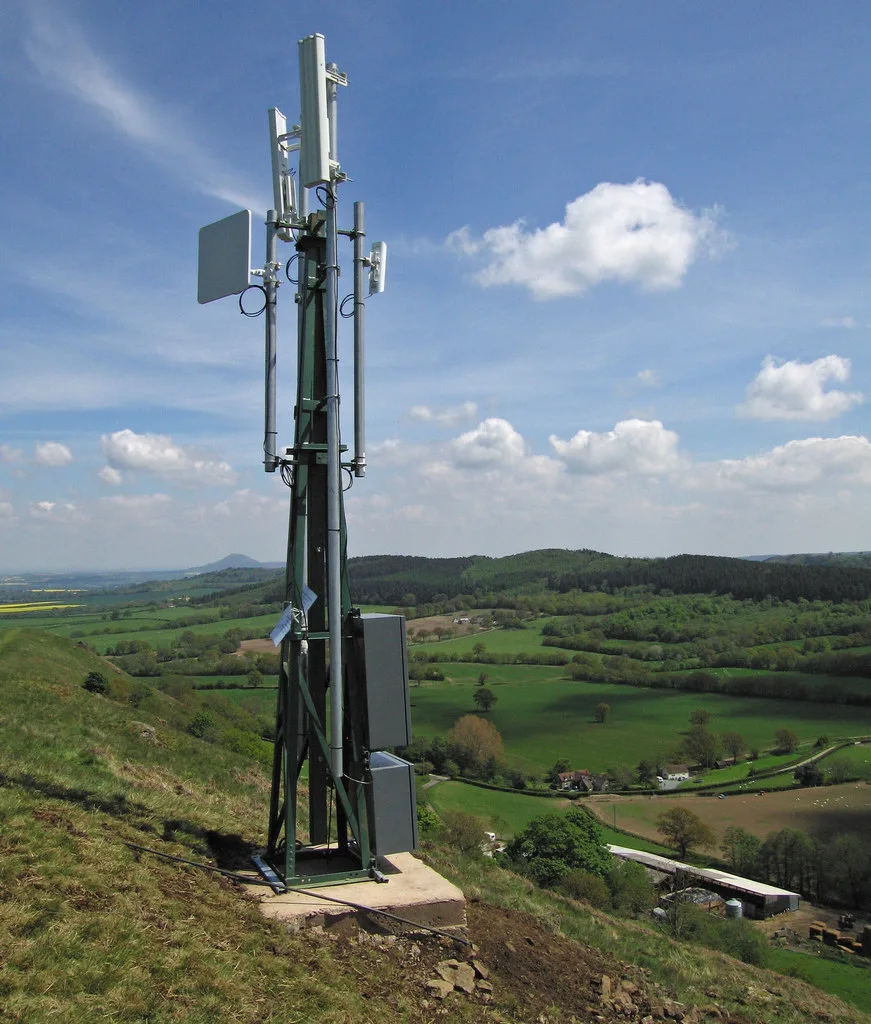
If you live somewhere fibre has not reached, these are frequently the companies that have actually built something near you.
What fixed wireless actually is
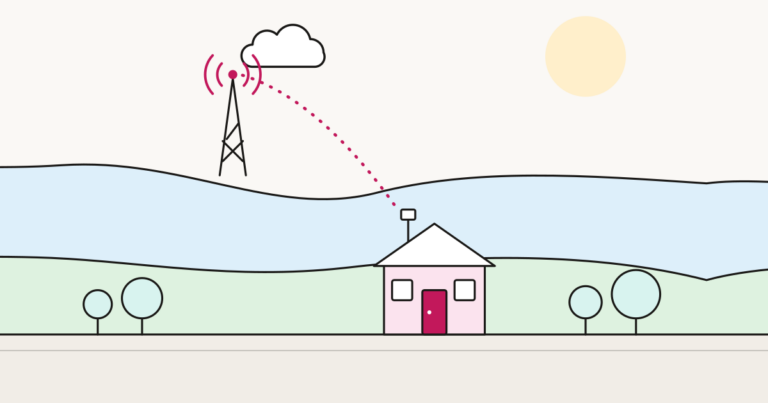
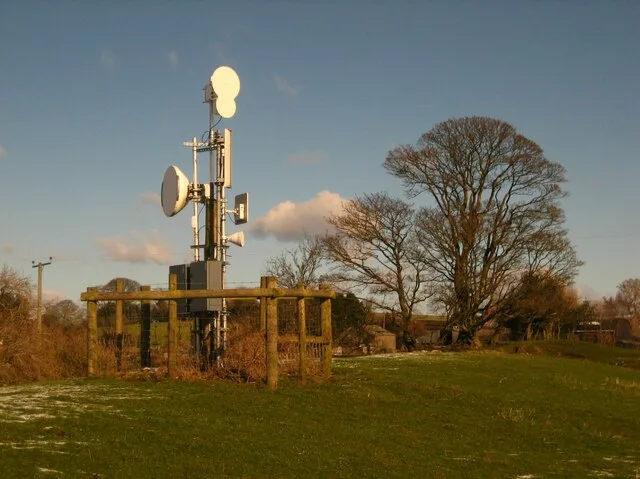
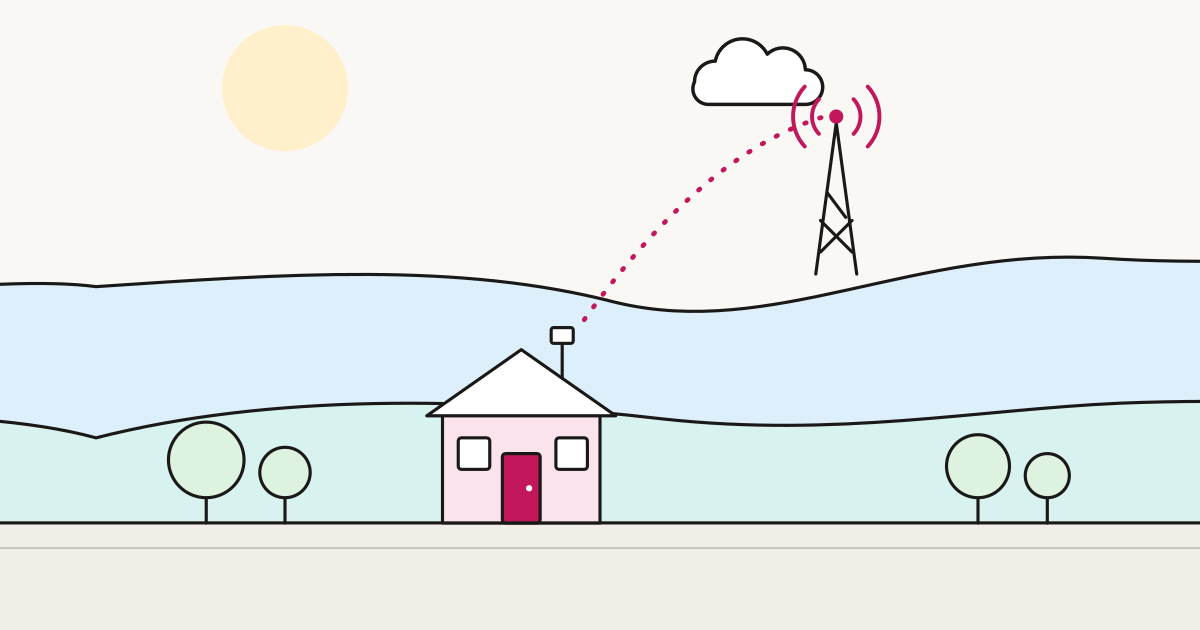
A fixed wireless access provider puts a transmitter somewhere high — a mast, a church tower, a farm building, a water tower — and beams a signal to a small antenna fixed to your house. Your antenna is aimed at theirs. The connection is point-to-point radio rather than a cable.
This is not the same as mobile broadband, though the categories overlap and providers sometimes sell both.
| Fixed wireless (WISP) | 4G/5G home broadband | Satellite | |
|---|---|---|---|
| Signal from | A local mast, usually within a few miles | The mobile network | Orbiting satellites |
| Equipment | Antenna fixed to your building, professionally aimed | A router you plug in yourself | A dish, professionally sited |
| Latency | Low — comparable to fibre for most uses | Low to moderate | High, though much improved on newer systems |
| Contention | Shared with others on the same mast | Shared with all mobile users nearby | Shared with everyone in your cell |
| Works where | Line of sight to the operator’s mast | Anywhere with decent mobile coverage | Almost anywhere with a clear view of the sky |
| Typical operator | Small local company | National mobile network | Global operator |
The key practical difference: fixed wireless is usually a local company that has surveyed your specific area and installed dedicated equipment aimed at your specific house. 4G home broadband is a national product that either works at your address or does not.
Why it is not a second-class connection
There is a reflex that treats anything without a cable as a compromise. For a lot of rural households that reflex is simply wrong.
The realistic comparison is not fibre. If full fibre reaches your street, take it — this article is not for you. The comparison that matters is fixed wireless against a long copper line delivering 6 Mbps on a good day, and against waiting an indefinite number of years for a fibre build that may never be commercially viable.
Against that, a wireless connection delivering 30-100 Mbps with usable latency is transformative rather than second-best.
Latency is usually fine. This is the thing people assume is bad and usually is not. A well-engineered fixed wireless link adds a few milliseconds. Video calls work. Most gaming works. It is not satellite.
Some of these operators are very good. Community-scale WISPs frequently outperform national providers on service simply because the person who answers the phone is the person who climbs the mast. Several have been running for fifteen years.
The honest disadvantages
Line of sight matters, and it is binary. If a hill, a stand of trees or a new building sits between you and the mast, you may not be serviceable at all — even if your neighbour is. Every operator surveys before installing, and the survey is the real answer to whether you can have it.
Trees grow. A link that worked in February can degrade in June. Reputable operators plan for this; it is worth asking how they handle it.
Weather has some effect. Less than people fear on most frequencies, but heavy rain can reduce throughput on higher-frequency links.
Contention is local and visible. If the operator oversells one mast, everyone on it slows down at peak time. Ask how many customers share your mast and what they do about congestion. A good operator will answer; a bad one will not understand the question.
Upload is often asymmetric in a way fibre is not, which matters if you work from home and push large files.
Company risk is concentrated. These are small businesses. If your operator is the only network in the village and it fails, there may be no alternative — unlike an Openreach reseller failing, where any other reseller can take over the line. Our guide on what happens when a provider goes bust covers this.
What to ask before you sign
- Will you survey before I commit? The answer should be yes, and the survey should be free or refundable. Anyone selling you a wireless connection without checking line of sight is selling you a maybe.
- **What speed will I get?** Not the headline. A wireless operator can usually tell you what your specific link should deliver once they have looked at the path.
- What is the contention on my mast? How many customers, and what happens at 8pm.
- What is the latency to a London exchange? A competent operator knows this number.
- Who owns the antenna, and what happens if I leave? Installation involves fixing hardware to your building. Establish whether you own it, whether removal is charged, and whether your landlord needs to agree.
- What is the contract term, and what is the exit charge? With a small provider, prefer shorter.
- Is there a data cap or a fair use policy? Less common than it used to be, but not extinct.
Satellite is a different thing again
We list satellite separately from fixed wireless on this site, deliberately, because folding them together would mislead.
Satellite reaches essentially anywhere with a clear view of the sky, which no other technology can claim. That makes it the answer of last resort for genuinely remote properties, and a real one.
But the trade-offs are different in kind, not degree: latency is materially higher than any ground-based option, which affects calls and gaming; hardware costs are usually significant; and performance depends on how many other users share your cell. Presenting a dish and a 5G router as the same category would flatten a distinction that matters a great deal to the person buying.
If you filter this site by connection type, satellite is its own option for that reason.
How to find them
The problem with fixed wireless operators is discovery. They do not advertise nationally, most do not run affiliate programmes, and several have websites that have not changed since 2015.
On this site, filter the Connection dropdown to Fixed wireless / 4G / 5G and enter your postcode. Every row that arrives by radio carries a “Fixed wireless” label, so you always know what you are looking at — nobody should discover after signing that their “broadband” is a mast link.
We show these providers whether or not they pay us anything. Almost none of them do.
Two honest caveats. Our footprints for the smallest operators are mapped from the county they publish, so treat them as “worth calling” rather than “definitely serves you” — for a village WISP, the operator’s own survey is the only real answer. And many of them do not publish prices online at all, so you may see a provider with no price on file. That is a gap in the data, not a judgement about the company.
Sources
- ofcom.org.uk — Ofcom — Connected Nations, fixed wireless access coverage
- ofcom.org.uk — Ofcom — mobile coverage checker
- ispreview.co.uk — ISPreview UK — UK ISP directory
- ukwispa.org — UK Wireless Internet Service Providers Association