One of the more maddening facts about UK broadband is that coverage is decided house by house, not street by street. Your neighbour opposite can order gigabit full fibre. You are quoted 12 Mbps and told nothing is planned.
This is not an error, and it is usually not anything to do with you. It is the visible edge of how fibre gets built in a competitive market.
Fibre is built where the arithmetic works
Every network operator — Openreach and every altnet — makes the same calculation before digging: what does it cost to pass this property, and how many customers will we win?
Cost per property varies enormously:
- Dense terraced streets and flats are cheap. One trench passes many front doors, and duct is often already there.
- Detached houses on long driveways are expensive. Each property needs its own run.
- Villages a few miles from the nearest fibre need a spine built out to them before a single customer can be connected.
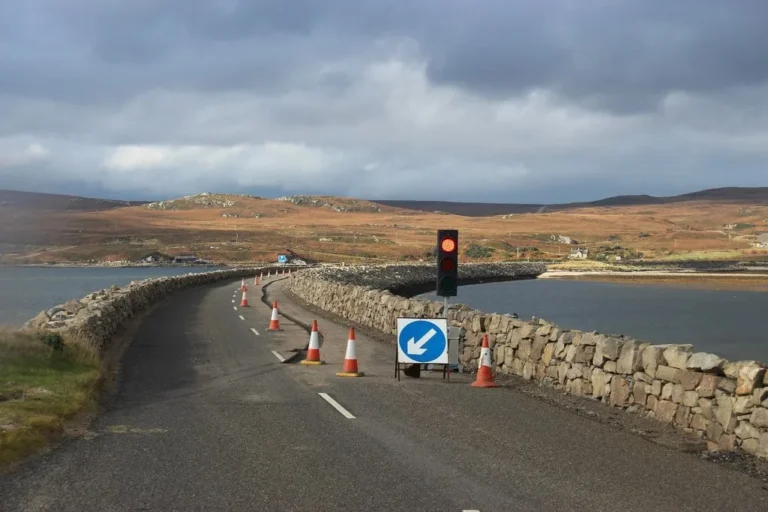
- Anywhere requiring road closures, protected verges or a river crossing carries costs that can dwarf the rest.
Revenue per property, meanwhile, barely varies. Broadly the same monthly price whether the property cost £300 or £3,000 to pass.
So the build follows the cost side, and the boundary between “worth it” and “not worth it” can fall in the middle of a street.
The specific reasons two neighbours differ
A build boundary. Networks are built in planned areas with defined edges. Those edges follow cabinet coverage, duct routes and funding boundaries — not anything visible from the pavement. Being on the wrong side of one is the most common explanation.
Different distances to the cabinet. On older copper-based connections, speed degrades with distance. Two houses 200 metres apart can have materially different sync speeds on identical technology.
Blocked or collapsed duct. Fibre is usually pulled through existing underground ducts. If the duct to your property is blocked, collapsed or full, connecting you means digging — turning a cheap connection into an expensive one. This is a genuinely common reason for a single property to be skipped on an otherwise-completed street.
Flats and shared buildings. A block usually needs the freeholder’s permission — a wayleave — before any operator can install. One unresponsive freeholder can leave an entire building without fibre in a fully-served area. This is one of the most frustrating cases because the infrastructure is right outside.
Your address is wrong in the records. Genuinely common in flats, subdivided houses and new builds. If a checker says your property does not exist, or gives an answer that contradicts your neighbours, a mis-recorded address is a likely cause and it is fixable.
Different networks reached you. Sometimes the difference is not that your neighbour has fibre and you do not — it is that a different company built to them. Their provider does not serve you; a different one might.
What you can actually do
1. Check every network, not every provider
This is the most useful thing on this page, and the most commonly missed.
Providers sell over networks. Several retail brands can sell you the same physical fibre, and one company’s “not available” tells you nothing about the others. There are now well over 200 broadband brands operating in the UK, and in most areas at least three or four distinct networks.
Check Openreach-based providers, cable, and any regional altnet operating near you. On this site, entering your postcode narrows the list to providers whose footprint covers your postcode area — treat that as “worth checking” and use each provider’s own checker for the definitive answer.
2. Register interest — it genuinely counts
Most altnets maintain demand registers, and they are not a token gesture. Build decisions at the margin are made on expected take-up, and a street with forty registrations is a materially better prospect than one with none.
This is the single highest-leverage thing an individual can do, and it costs nothing. It works considerably better as a street than as a household — one registration is a data point, forty is a business case.
3. Check for community schemes
Government and local-authority programmes exist to subsidise connections in areas where the commercial case fails. Terms and availability change, so check the current position rather than an old article. Community fibre partnerships, where a village aggregates demand and sometimes contributes funding, have connected a lot of properties that would never have been built to commercially.
Some of the best rural networks in the country started this way, built by community benefit societies rather than telecoms companies.
4. Consider whether you need a cable at all
If fibre genuinely is not coming, the realistic comparison is not fibre versus waiting — it is what you can get now.
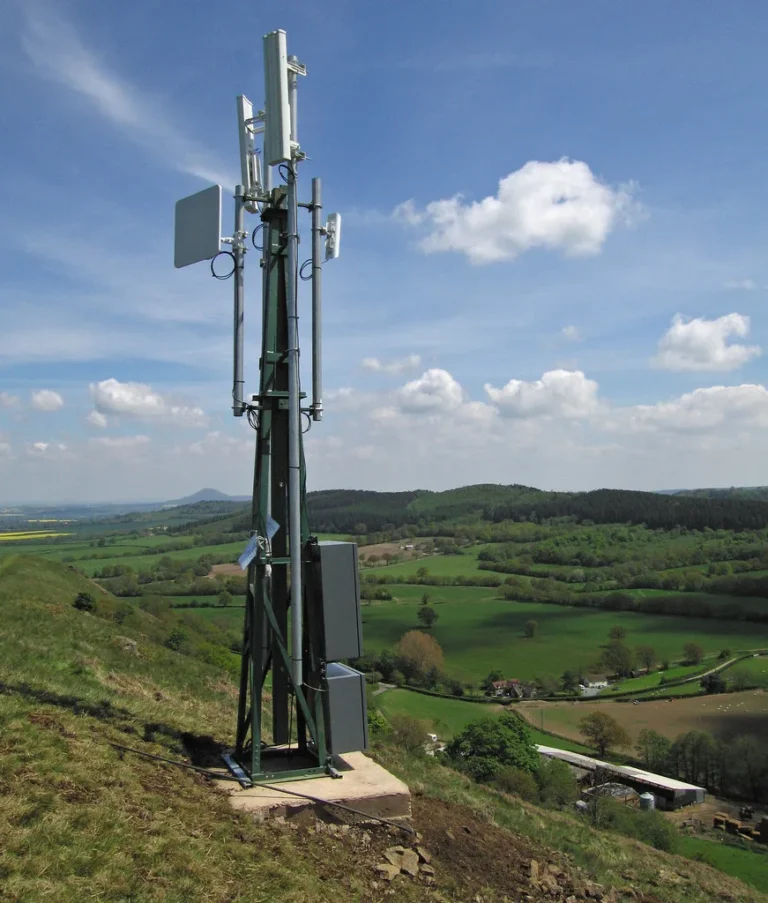
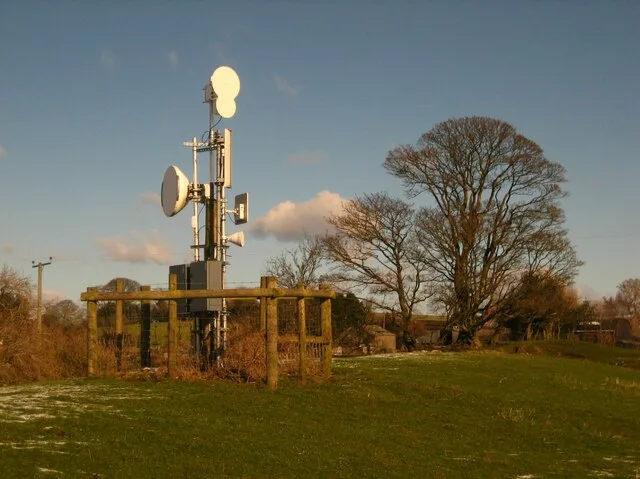
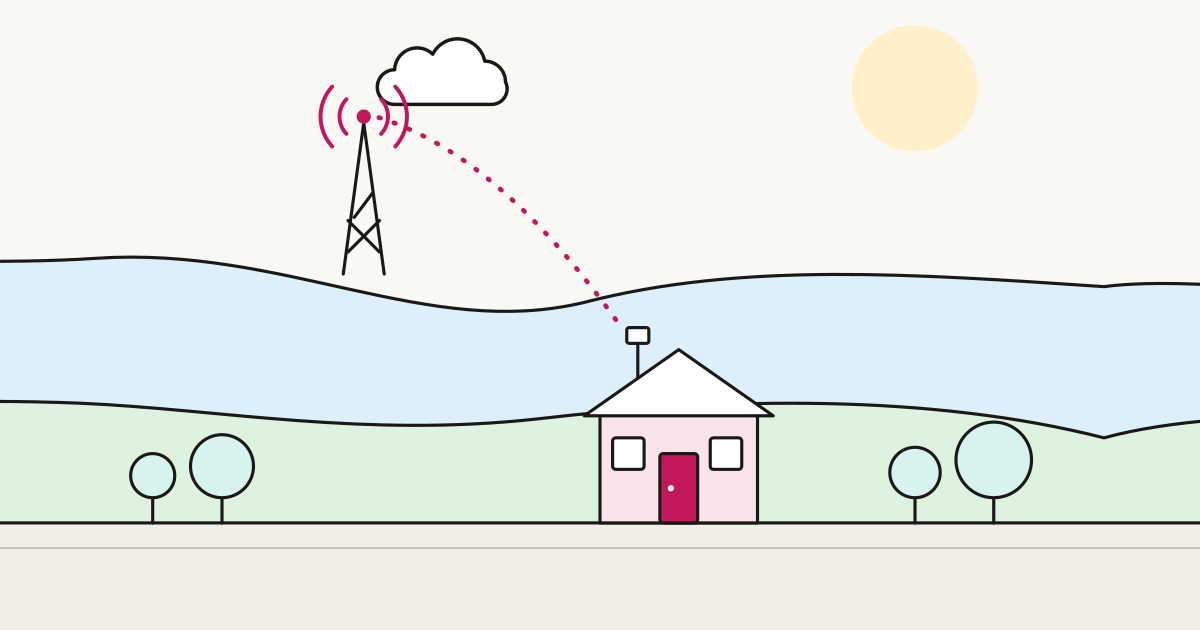
Fixed wireless operators serve a surprising amount of rural Britain by radio from local masts. We list 58 providers that deliver at least partly this way, most of which never appear on mainstream comparison sites. Latency is usually fine; the constraint is line of sight to their mast.
4G or 5G home broadband works anywhere with decent mobile signal and needs no installation.
Satellite reaches essentially anywhere with a clear view of the sky, at the cost of higher latency and usually hardware charges.
Our guide to fixed wireless covers the trade-offs, and the connection-type filter on this site lets you see only those options.
5. Know your Universal Service Obligation rights
If your connection falls below the threshold set by the broadband Universal Service Obligation, and no alternative is available to you, you may have a legal right to request a decent connection. It is not unlimited — there is a cost threshold above which you can be asked to contribute, and the contribution can be large — but for properties genuinely stranded on very slow lines it is a real mechanism rather than a theoretical one.
Our postcode panel flags when addresses in your postcode fall below the USO threshold.
What not to bother with
Arguing with the provider’s checker. The person on the phone cannot override the network record. If the record is wrong, that is a records problem and needs correcting at source.
Waiting for a rollout announcement to include you. Announcements name towns. Whether your specific property is in the build is decided later, by the engineering survey.
Assuming “no fibre” is permanent. Coverage has changed rapidly, and altnets have collectively passed millions of premises in a few years. An answer from two years ago is worth re-checking.
The uncomfortable summary
Where fibre gets built is a commercial decision made by companies weighing cost against expected revenue. It is not allocated by need, and it does not follow how much you would value it.
The things that shift the arithmetic in your favour are: aggregating demand with your neighbours, checking every network rather than every brand, and being open to a connection that arrives by radio rather than through the ground.
Sources
- ofcom.org.uk — Ofcom — Connected Nations coverage reports
- ofcom.org.uk — Ofcom — broadband Universal Service Obligation
- openreach.com — Openreach — network and fibre availability
- inca.coop — INCA — Independent Networks Cooperative Association